Leave A Message
If you are interested in our products and want to know more details,please leave a message here,we will reply you as soon as we can.


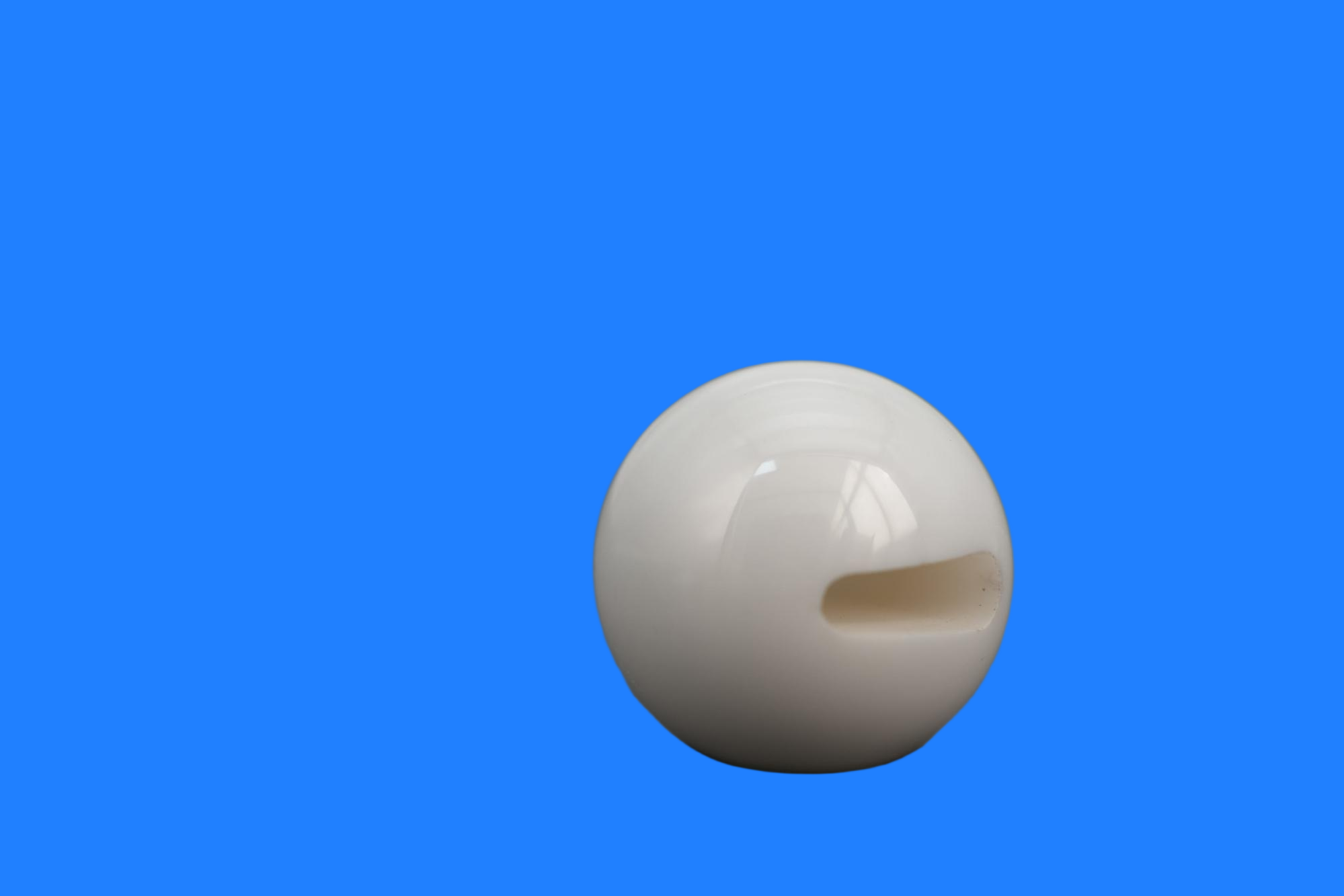
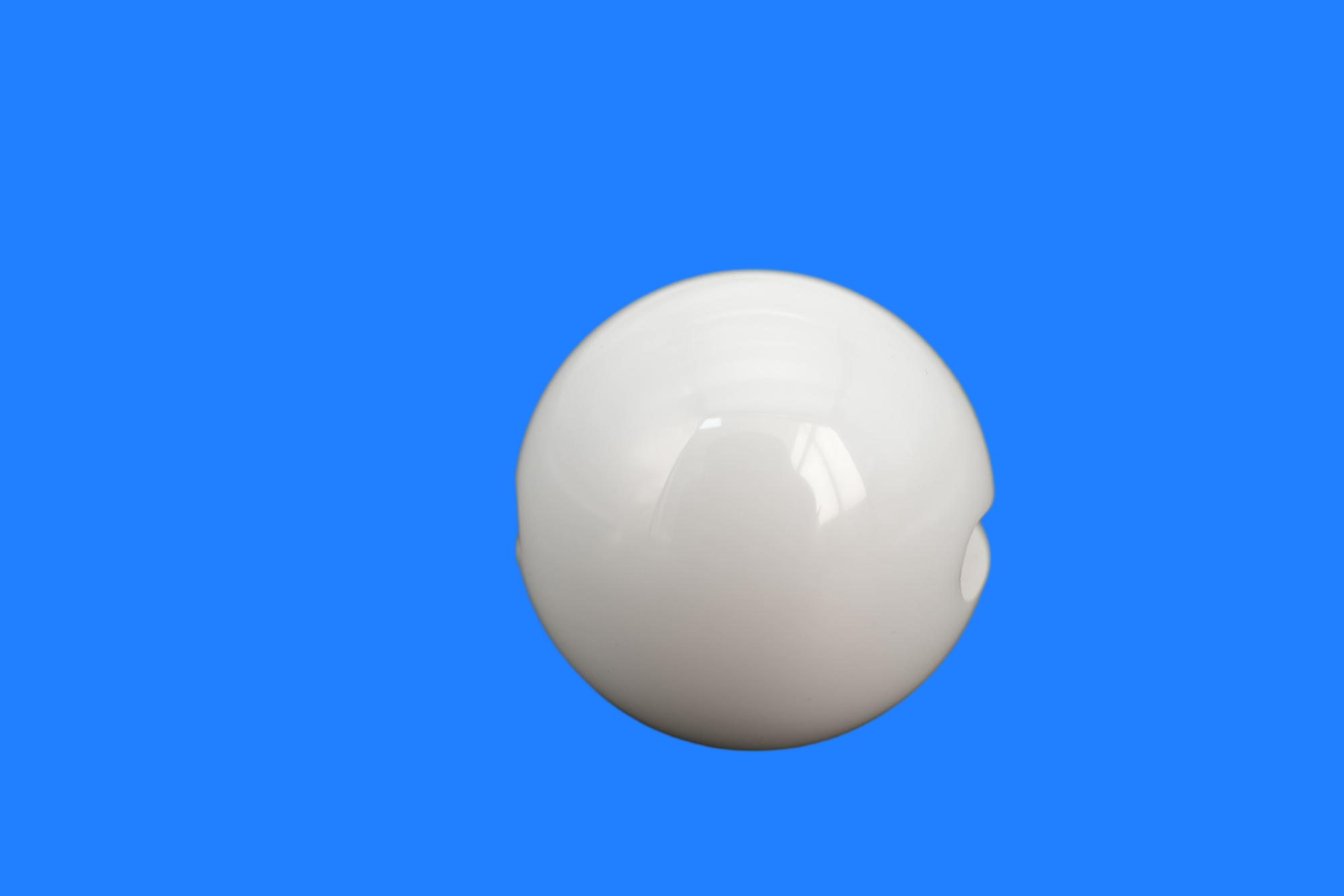
Zirconia ceramic ball is precision spherical component made from yttrium-stabilized tetragonal zirconia (Y-TZP/YSZ) high-performance ceramic material. As the most resilient representative among structural ceramics, Zirconia Ball achieve fracture toughness close to that of metallic materials while maintaining the high hardness and wear resistance of ceramics through a unique phase transformation toughening mechanism (stress-induced martensitic phase transformation). This makes them core functional components in fields such as precision bearings, ultrafine grinding, fluid control, and medical devices.
Wear-resistant Zirconium Oxide Ball
Product Description
ZrO2 Ball is the culmination of modern engineering ceramic materials science and precision manufacturing technology. With their unique combination of properties—lighter than steel, harder than aluminum, and tougher than ceramics—they play an irreplaceable role in a wide range of applications, from micron-level electronic pastes to ton-scale chemical reactors. As the "heart" of precision bearings, the "crusher" of nanomaterials, and the "guardian" of life and health, zirconia ceramic spheres are driving strategic emerging industries such as high-end equipment manufacturing, new energy, and biomedicine towards higher precision, higher efficiency, and greater sustainability.
Based on their application functions, zirconia ceramic balls are mainly divided into two categories:(1) Bearing-grade precision balls: used in high-precision applications such as high-speed bearings, measuring instruments, and valve seals; (2)Zirconia Grinding Balls: used for ultrafine grinding and dispersion of coatings, inks, pharmaceuticals, and new energy materials.
Manufacturing Process and Accuracy class
1.Manufacturing Flow: Near-net-shape forming → Cold isostatic pressing → High-temperature sintering → Precision grinding
2.Four Key Processes:Powder Preparation: High-purity zirconia powder (>99.9%) + 3 mol% Y₂O₃ stabilizer, pre-dispersed by ultrasonication and spray-dried granulation
3.Forming Process:
(1)Isostatic pressing: Suitable for spheres larger than Ø5mm, excellent density uniformity
(2)Injection molding (CIM): Suitable for microspheres smaller than Ø0.4mm, high degree of automation
(3)Sintering: Atmospheric sintering at 1450–1550°C or hot isostatic pressing (HIP), density ≥99.5% of theoretical density
4.Precision Machining:
(1)Rough grinding: Diamond wheel to remove sintering allowance
(2)Fine grinding: Chemical mechanical polishing (CMP) technology, surface roughness Ra<0.014μm
(3)Polishing: Soft abrasive fixed to the grinding wheel to avoid microcrack damage
5.Accuracy class (GB/T 308-2002 / DIN 5401)
| Grade | Sphere diameter variation | Spherical error | Surface roughness Ra | Application scenarios | |
| G3 | <0.08μm | <0.08μm | <0.01μm | Aerospace spindle bearings, precision measuring instruments | |
| G5 | <0.13μm | <0.13μm | <0.014μm | High-speed dental handpiece bearings, gyroscope | |
| G10 | <0.25μm | <0.25μm |
|
Precision machine tool spindle, vacuum pump | |
| G20–G40 | <0.5–1μm | <0.5–1μm | <0.05μm | General industrial valves and fluid control |
Core Performance Advantages
1. Lightweight and High-Speed Performance
Density is only 6.0 g/cm³ (77% of steel balls), reducing centrifugal force by 23% in high-speed bearings (DN value > 1.0 × 10⁶), significantly reducing channel wear, allowing for higher speeds (the limiting speed of ceramic ball bearings is 1.3–1.5 times that of steel bearings), with minimal gyroscopic effect, suitable for ultra-high-speed spindles (> 50,000 rpm).
2. Zero Pollution and Chemical Inertness
Non-magnetic: Does not interfere with precision sensors and magnetic levitation systems.
Electrically Insulating: Prevents electro-corrosion caused by current passing through the bearing (essential for variable frequency motors).
Biocompatibility: ISO 10993 certified, suitable for implantable devices.
Corrosion Resistance: Resistant to strong acids, strong alkalis, and organic solvents, suitable for chemical pumps and valves.
3. Extreme Environment Adaptability
High Temperature Stability: No strength reduction or softening/deformation at 750°C
Thermal Shock Resistance: Withstands rapid temperature changes (ΔT) of 280–350°C
Vacuum Compatibility: Grease-free self-lubricating, suitable for aerospace vacuum environments
4. Ultra-Long Service Life
Under contaminated lubrication or dry friction conditions, the wear rate of zirconia ceramic balls is only 1/5–1/10 that of steel balls, extending service life by 2–5 times.
Product Specifications Series
| Category | Diameter range | Common Specifications | Accuracy level | |
| Miniature bearing balls | Ø0.4–3.0 mm |
|
G5–G10 | |
| Medium-sized bearing balls | Ø3.0–25.4 mm | 3.969, 4.763, 6.35, 7.938, 9.525, 12.7 mm |
|
|
| Large valve ball | Ø25–100 mm | 30, 40, 50, 60, 80, 100 mm | G20–G40 | |
| Grinding media balls | Ø0.1–50 mm | 0.2–0.4, 0.6–0.8, 1.0–1.2, 2.0–2.5, 5, 10, 20, 30 mm | Roundness ±0.05mm | |
| Non-standard customization | Ø0.4–100 mm | According to customer drawings | According to the agreement |
Material formulation options:
1.White Y-TZP: Standard type, balanced overall performance
2.Blue Y-TZP: Colorant added for easier wear detection
3.ZTA composite: Zirconia-toughened alumina, hardness increased to 1800 HV, suitable for high-wear grinding
Usage and Maintenance Guidelines
Installation Precautions
1.Matching Design: The bearing rings mating with zirconia balls are recommended to be made of silicon nitride ceramic or 440C stainless steel (hardness HRC 58–60) to avoid soft metal wear and contamination.
2.Preload Control: Due to the high elastic modulus of ceramic balls (205 GPa), the preload should be 20–30% lower than that of steel ball bearings.
3.Lubrication Requirements: Although zirconia balls can withstand dry friction, it is recommended to use synthetic hydrocarbon oil or PFPE fluoroether oil to extend their lifespan.
4.Dustproof Seal: Ceramic balls are sensitive to particulate contamination and must be equipped with rubber or fluororubber seals.
Failure Mode Warnings
1.Normal Wear: Decreased surface gloss, increased operating noise.
2.verload Fracture: Sudden vibration and temperature rise require immediate shutdown and inspection of load and alignment.
3.Thermal Shock Cracks: Network cracks appear after a sudden temperature change; the heating/cooling rate must be controlled to <5°C/min.
Our customized Process

Why choose us?
1.Customized R&D, rather than standard product adaptation
2.Deep control of materials science:Material Selection Based on Needs,Microstructure Optimization,Batch Consistency
3.Precision machining capability:Flatness can reach 0.001mm, parallelism 0.002mm, and roughness Ra 0.1μm.
FAQ
Q1: What products does your company offer?
We specialize in high-performance ceramics such as alumina and silicon nitride, providing insulators, structural components, wear-resistant parts, and customized solutions.
Q2: Can you customize non-standard parts?
Yes. We support processing based on provided drawings and collaborative technical development, offering a full-process service from design to mass production.
Q3: What about accuracy and delivery time?
Standard tolerance ±0.05mm, precision grade ±0.01mm; samples 7-15 days, bulk orders 20-30 days.
Q4: Main application areas?
Power, electronics, machinery, chemical, and aerospace industries.
Q5: Quality assurance measures?
Full-process quality inspection, providing material reports and performance test data, supporting third-party certification and testing.
Q6: Do you provide technical support?
We provide professional support such as material selection consultation, design optimization, and failure analysis.



 IPv6 network supported
Leave A Message
Scan to Wechat :

Scan to WhatsApp :