Leave A Message
If you are interested in our products and want to know more details,please leave a message here,we will reply you as soon as we can.


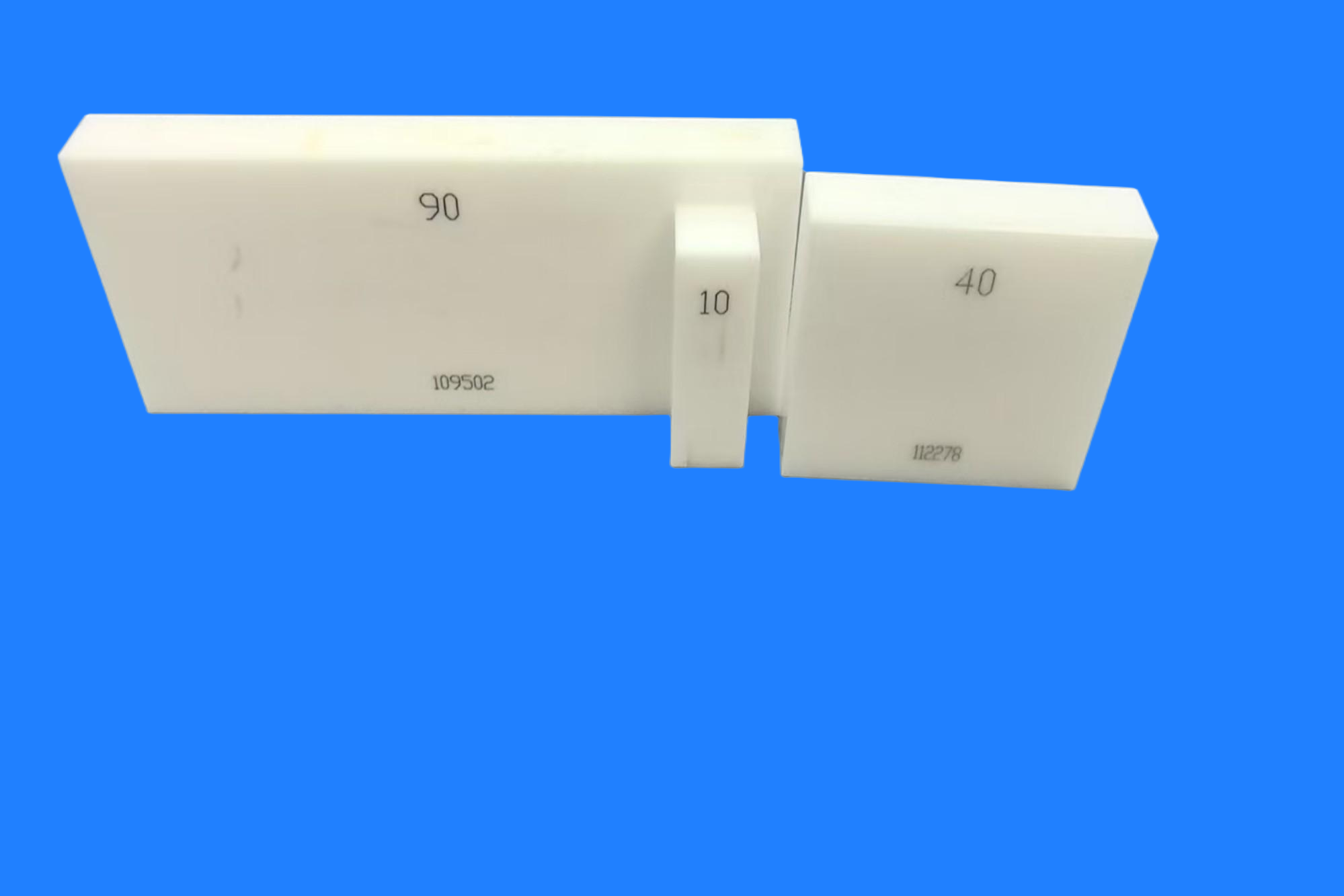
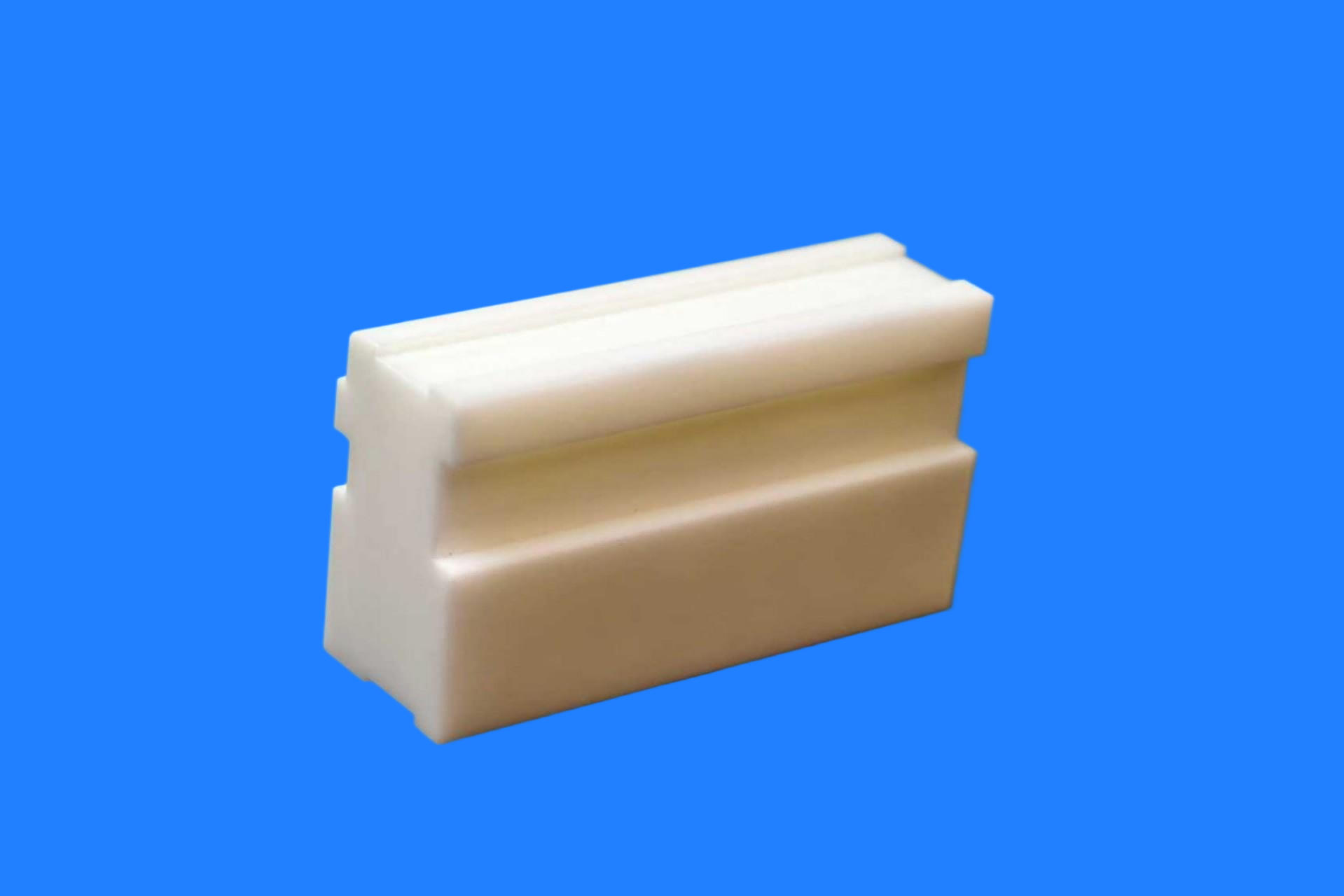
Zirconia Ceramic Gage Blocks is precision length measuring standards manufactured using high-purity zirconia (ZrO₂) toughened ceramic material. As an upgraded replacement for traditional steel gauge blocks, they integrate advanced ceramic materials science and ultra-precision machining technology, providing modern manufacturing with a more stable, durable, and reliable measurement reference solution.
A1 Grade Ceramic Gage Blocks
Product Description
Ceramic Gage Blocks is a new generation of fundamental components for high-precision length measurement. Made of high-purity zirconia, they have a coefficient of thermal expansion similar to alloy steel and exhibit minimal temperature drift. Furthermore, they surpass traditional steel gauge blocks in wear resistance, corrosion resistance, and insulation. These products are widely used in precision manufacturing, automotive, aerospace, electronics and semiconductors, and metrology laboratories. They can be used for gauge calibration, precision machining, mold inspection, and quality control of high-end equipment, serving as crucial basic components for achieving uniform measurement values and controllable accuracy. With advantages such as high hardness, long lifespan, dimensional stability, corrosion resistance, maintenance-free operation, and non-magnetic insulation, they offer lower overall operating costs, stronger environmental adaptability, and longer-lasting accuracy maintenance. They have become an ideal replacement for traditional steel gauge blocks and a key fundamental material supporting the development of high-precision manufacturing in Industry 4.0.
Why choose zirconia ceramic gage blocks?
Three major pain points of traditional steel gage blocks
| Pain points | Specific manifestations | Costs |
| Prone to rust | Rust spots will form in humid environments or upon contact with sweaty hands. | Frequent maintenance and premature scrapping |
| Easy to wear | Repeated grinding caused damage to the measuring surface | Loss of accuracy, frequent replacement |
| Poor stability | Residual stress release leads to dimensional drift | Measurement system misalignment and quality risks |
Solutions for zirconia ceramic blocks
1.Never rusts – Completely immune to moisture and chemical corrosion
2.Super wear-resistant – Extends service life by 5-10 times
3.Permanently stable – Annual dimensional change <0.1μm/m
4.Equivalent precision – Fully compliant with ISO 3650 and JJG 146 standards
Core technological advantages from W7
1.Breakthrough in Material Performance
Utilizing 3Y-TZP (3mol% yttrium-stabilized tetragonal zirconia polycrystalline) high-end ceramic material
| Key performance | Zirconia ceramics | Alloy tool steel | Advantage multiple |
| Hardness (HV) | 1,250 | 800 | 1.6× |
| Flexural strength | 950 MPa | 2,000 MPa | Toughness close to |
| Fracture toughness | 10 MPa·m½ | 50 MPa·m½ | The highest in ceramics |
| Abrasion resistance | Baseline × 15 | Baseline ×1 | 15× |
| Corrosion resistance | Completly no | Prone to rust | ∞ |
| Coefficient of thermal expansion | 9.5×10⁻⁶/K | 11.5×10⁻⁶/K | More stable |
Technical principle: The stress-induced phase transformation toughening mechanism enables ceramic materials to possess the strength and toughness of metals.
2.Ultra-precision manufacturing process
Raw material purification → Isostatic pressing → High-temperature sintering → Hot isostatic pressing (HIP) densification → CNC precision grinding → Nanoscale polishing → Laser interferometry calibration → Isothermal aging treatment
Manufacturing Highlights:
(1)HIP treatment: eliminates micropores, achieving a density of 99.9% of theoretical density
(2)Atomic-level surface: Ra≤0.003μm, achieving perfect optical bonding
(3)Artificial aging: natural aging for 6 months before shipment, ensuring optimal dimensional stability
3.Metrological performance guarantee
Full coverage of accuracy levels
| Grade | Length deviation | Length variation | Applicable Scenarios |
| Level 00 (K-level) | ±(0.05+0.0001L)μm | 0.05μm | National Standards and Metrology Institute |
| Level 0 | ±(0.07+0.0001L)μm | 0.10μm | Enterprise highest standards |
| Level 1 | ±(0.10+0.0002L)μm | 0.20μm | Workshop on-site standards |
| Level 2 | (0.20+0.0004L)μm | 0.40μm | General testing |
Customized Services
1.Non-standard sizes: Custom lengths of any nominal size based on customer drawings
2.Imperial units: 0.010 inches to 4 inches, compliant with ASME B89.1.9
3.Square/Round cross-sections: Cross-section designs for special applications
4.Custom marking: Laser marking of customer logos and asset numbers
5.Steel embedded composite: Steel embedded design at both ends, balancing fit and wear resistance
Quick referencetechnical specifications table
1.Physical properties
| Parameter | Numerical values | Test Standards |
| Material density | 6.05 ± 0.05 g/cm³ | GB/T 25995 |
| Vickers hardness | 1,200-1,350 HV | ISO 6507 |
| Flexural strength | ≥900 MPa | ISO 6872 |
| Fracture toughness | ≥8 MPa·m½ | ISO 15732 |
| Elastic modulus | 205 GPa | ISO 17561 |
| Coefficient of thermal expansion (20-100℃) | 9.5×10⁻⁶/K | ISO 17562 |
| Thermal conductivity | 2.5 W/(m·K) | ASTM C408 |
| Surface resistivity | >10¹⁴ Ω·cm | IEC 60093 |
2.Metrological performance (taking 100mm Class 0 as an example)
| Parameter | Specifications | Typical measured values |
| Center length deviation | ±0.17μm | ±0.08μm |
| Length variation | ≤0.10μm | ≤0.05μm |
| Research and development | Good | Excellent |
| Surface roughness Ra | ≤0.01μm | ≤0.003μm |
| Flatness | ≤0.10μm | ≤0.05μm |
Client Case Studies
Case Study 1: A National Metrology Institute
Background: The existing steel reference gauge block set had been in use for 5 years, frequently exhibiting corrosion and dimensional drift, resulting in high maintenance costs.
Solution: Replaced the entire set with a 112-piece zirconia ceramic 00-grade set.
Results:(1)maintenance workload reduced by 90%
(2)annual stability verification pass rate 100%
(3)consistency of international metrological comparison results improved by 30%
Case Study 2: A Semiconductor Equipment Manufacturer
Background: Cleanroom environments require zero metal contamination, which steel gauge blocks could not meet.
Solution: Custom-designed steel-embedded composite zirconia ceramic gauge blocks, with steel mating surfaces at both ends and a ceramic body.
Results:
(1)Meets ISO 14644-1 Class 5 cleanroom requirements
(2)Achieves compatibility and mating with the existing steel gauge block system
(3)Passes the client's annual quality audit with zero non-conformities.
Why choose us?
1.Customized R&D, rather than standard product adaptation
2.Deep control of materials science:Material Selection Based on Needs,Microstructure Optimization,Batch Consistency
3.Precision machining capability:Flatness can reach 0.001mm, parallelism 0.002mm, and roughness Ra 0.1μm.
FAQ
Q1: What products does your company offer?
We specialize in high-performance ceramics such as alumina and silicon nitride, providing insulators, structural components, wear-resistant parts, and customized solutions.
Q2: Can you customize non-standard parts?
Yes. We support processing based on provided drawings and collaborative technical development, offering a full-process service from design to mass production.
Q3: What about accuracy and delivery time?
Standard tolerance ±0.05mm, precision grade ±0.01mm; samples 7-15 days, bulk orders 20-30 days.
Q4: Main application areas?
Power, electronics, machinery, chemical, and aerospace industries.
Q5: Quality assurance measures?
Full-process quality inspection, providing material reports and performance test data, supporting third-party certification and testing.
Q6: Do you provide technical support?
We provide professional support such as material selection consultation, design optimization, and failure analysis.



 IPv6 network supported
Leave A Message
Scan to Wechat :

Scan to WhatsApp :