Leave A Message
If you are interested in our products and want to know more details,please leave a message here,we will reply you as soon as we can.


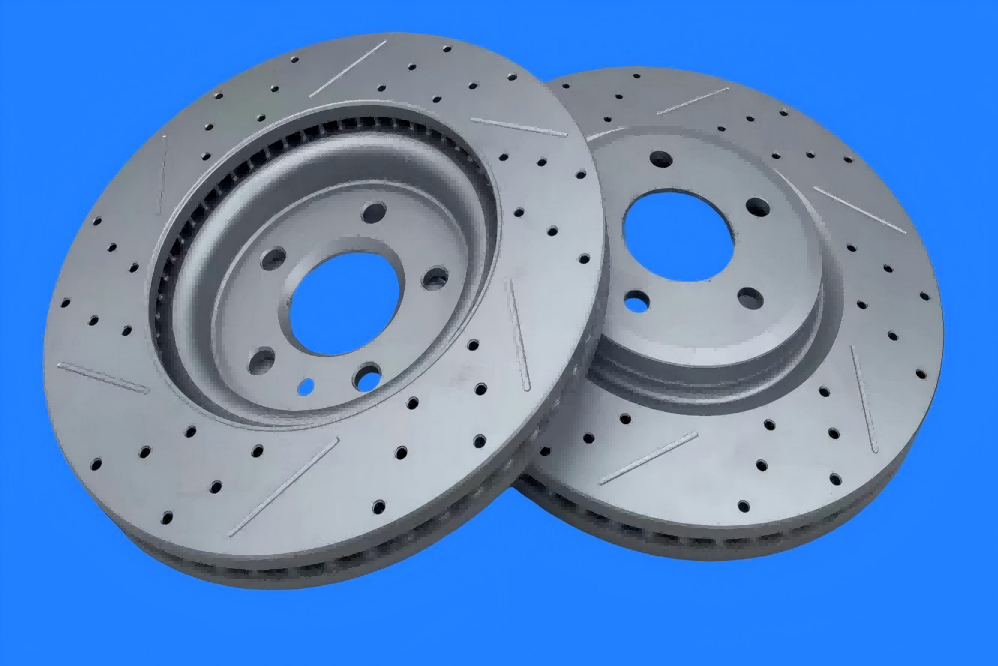
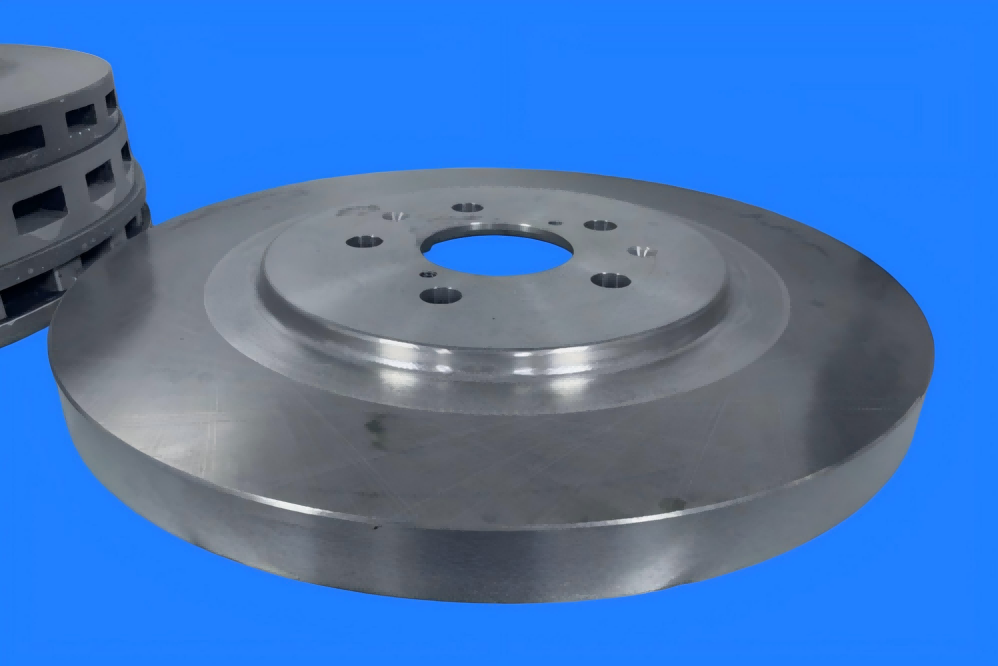
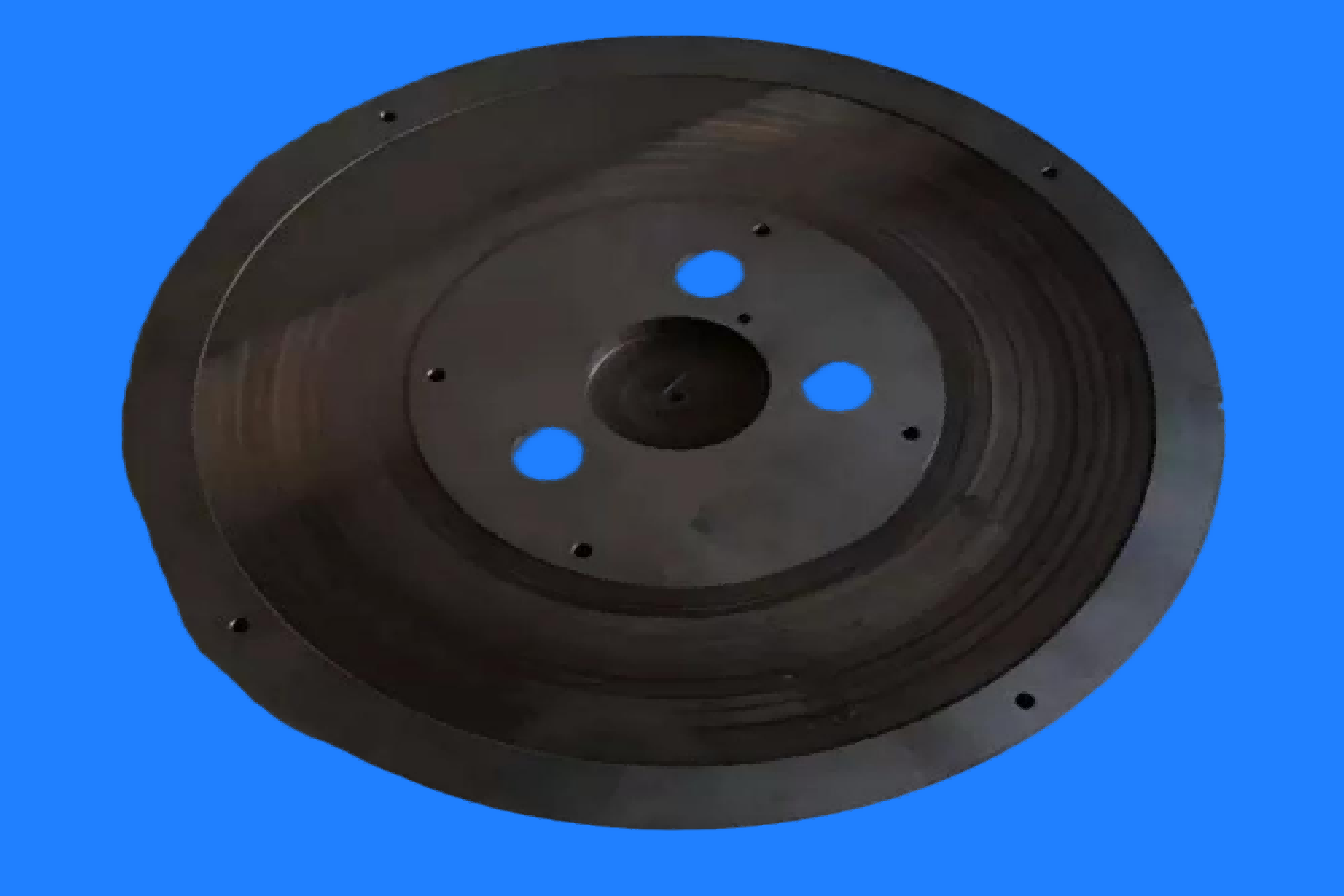
SiC Ceramic Brake Discs are composite material brake discs made of silicon carbide (SiC) as the matrix and manufactured through advanced processes such as chemical vapor infiltration (CVI), reactive infiltration (RMI), or hot pressing sintering. They represent the future direction of braking technology, and their lightweight, high temperature resistance, and long life characteristics perfectly meet the needs of high-performance cars and new energy vehicles.
Carbon fiber reinforced Silicon Carbide Ceramic Brake Discs
Product Description
Ceramic Brake Discs, as a high-performance braking solution, use carbon fiber reinforced silicon carbide as their core material. With advantages such as lightweight design, high temperature resistance, and long lifespan, they have become the preferred braking component for supercars, performance cars, and professional racing.
In terms of performance, they represent a qualitative leap compared to traditional cast iron brake discs: their density is only about one-third that of cast iron, significantly reducing unsprung mass and improving vehicle handling and fuel economy; their maximum operating temperature reaches 1400℃, completely solving the problem of heat fade under continuous braking, and their braking stability far exceeds that of metal materials; their hardness and wear resistance are 8–10 times that of cast iron, extending their service life to 500,000–1,000,000 kilometers, while also possessing excellent corrosion resistance, making them suitable for extreme environments and long-term use.
Product Specifications
Core material system
| Material Type | Matrix/Reinforcing Phase | Density | Typical Applications |
| C/C-SiC | Carbon fiber reinforced silicon carbide | 1.8-2.2 g/cm³ | High-end passenger cars, racing cars |
| SiC/SiC | Silicon carbide fiber reinforced silicon carbide | 2.5-3.0 g/cm³ | Aviation and military industries |
| Short fiber SiC ceramics | Silicon carbide particles/whiskers | 3.0-3.2 g/cm³ | Industrial Braking |
Superior performance advantages
1.Lightweight Characteristics:density is only 1/3 that of cast iron discs (approximately 2.0 vs 7.2 g/cm³). Overall unsprung mass is reduced by more than 50%. Significantly improved handling response and fuel economy/driving range.
2.Extreme heat resistance:it does not fail at 1400℃, exhibits no thermal decay, and maintains stable continuous braking performance.
3.Braking performance
Stable coefficient of friction: 0.35-0.45 (fluctuation <10% over a wide temperature range)
No thermal fade: continuous high-intensity braking performance remains undiminished
Short braking distance: braking distance from 100-0 km/h can be reduced by 2-5 meters
Excellent thermal shock resistance: no cracking under rapid cooling and heating.
4.Durability and Environmental Friendliness
Service Life: Over 300,000 km (cast iron discs approximately 80,000-100,000 km)
Low Wear Rate: 70% reduction in wear on mating parts (brake pads)
Rust-Free: Resistant to salt spray and chemical corrosion
Reduced Dust: 90% reduction in brake dust emissions
| Applications | Core role |
| 1.High-end passenger vehicles |
(1)Supercar brands: Ferrari, Lamborghini, Porsche, Bugatti (standard equipment) (2)Luxury sedans: Mercedes-AMG, BMW M, Audi RS series optional extras (3)New energy high-performance vehicles: Tesla Model S Plaid, Porsche Taycan Turbo S |
| 2. Rail transit |
(1)High-speed rail brake discs (for trains with speeds of 350 km/h and above) (2)Maglev Train Braking System (3)Lightweight Retrofitting of Urban Rail Vehicles |
| 3.Aviation and military industry |
(1)Aircraft landing braking system (2)Military armored vehicles (3)UAV/missile control surfaces |
| 4.Aviation and military industry |
(1)Ash content determination (2)Loss on ignition analysis (3)High-temperature calcination treatment |
| 5.Industrial sector |
(1)Yaw braking of wind turbine generator set (2)Heavy mining trucks and construction machinery (3)High-speed elevator emergency braking |
Precautions:
Why choose us?
1.Customized R&D, rather than standard product adaptation
2.Deep control of materials science:Material Selection Based on Needs,Microstructure Optimization,Batch Consistency
3.Precision machining capability:Flatness can reach 0.001mm, parallelism 0.002mm, and roughness Ra 0.1μm.
FAQ
Q1: What products does your company offer?
We specialize in high-performance ceramics such as alumina and silicon nitride, providing insulators, structural components, wear-resistant parts, and customized solutions.
Q2: Can you customize non-standard parts?
Yes. We support processing based on provided drawings and collaborative technical development, offering a full-process service from design to mass production.
Q3: What about accuracy and delivery time?
Standard tolerance ±0.05mm, precision grade ±0.01mm; samples 7-15 days, bulk orders 20-30 days.
Q4: Main application areas?
Power, electronics, machinery, chemical, and aerospace industries.
Q5: Quality assurance measures?
Full-process quality inspection, providing material reports and performance test data, supporting third-party certification and testing.
Q6: Do you provide technical support?
We provide professional support such as material selection consultation, design optimization, and failure analysis.



 IPv6 network supported
Leave A Message
Scan to Wechat :

Scan to WhatsApp :