
Leave A Message
If you are interested in our products and want to know more details,please leave a message here,we will reply you as soon as we can.



We can offer significant performance and cost advantages to meet your needs. Search our selection of technical ceramics including our Technical Ceramic Materials and Advanced Ceramic Standard Products.
When foreigners mention "China," they invariably think of Porcelain—this great invention that has spanned thousands of years of Chinese civilization and has long been a classic symbol of Eastern culture. From the simple pottery of the Neolithic Age to the legendary celadon of the Song Dynasty, with its "sky-blue after rain" finish, traditional Chinese ceramics have written a chapter in the creative history of human civilization with their artistic beauty and practicality.
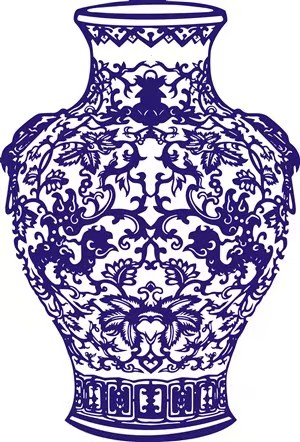
English Name
| Name | Meaning | Illustrate |
| China | China | Capitalize the first letter to indicate the country. |
| china | Porcelain | Lowercase initials refer to porcelain. |
| Chinaware | Chinese tiles/Chinese ceramics | The earliest full name, later simplified to China. |
| Porcelain | Porcelain | In formal academic terminology, it refers to fine porcelain fired at high temperatures. |
| Ceramics | Ceramics | Generally refers to all ceramic products |
"Porcelain Country"—An Alternative Name for China
China has long been known as the "Porcelain Country," a name derived from:
Main Porcelain Types
| Chinese | English | Illustrate |
| 青花瓷 | Blue-and-white porcelain | Mainstream varieties of Chinese porcelain |
| 唐三彩 | Sancai / Tricolor glazed pottery | Famous porcelain from the Tang Dynasty |
| 钧瓷 | Jun porcelain | One of the five famous kilns of the Song Dynasty |
| 骨瓷 | Bone china | High-grade porcelain containing bone ash |
| 景德镇瓷 | Jingdezhen porcelain | Products of the World's Porcelain Capital |
In the wave of modern industry, another type of ceramics is quietly emerging—Industrial Ceramics (Advanced Ceramics). It is derived from traditional processes, but with its brand-new material genes and properties, it has become the "hard core foundation" supporting high-end manufacturing, semiconductors, new energy, and aerospace.
Industrial/Advanced Ceramics are the culmination of laboratory and precision manufacturing. They utilize high-purity synthetic inorganic compounds as raw materials, such as alumina (Al₂O₃), zirconium oxide (ZrO₂), silicon carbide (SiC), and silicon nitride (Si₃N₄), with purity often reaching 95%–99.9%. These materials feature ultra-fine particle size and precisely controllable composition. Higher sintering temperatures (1400–2000℃) and more stringent processes completely eliminate the impurity limitations of natural raw materials, allowing for targeted performance design.
China porcelain and industrial ceramics are not opposites, but rather evolved from the same source and mutually empowering each other. The former is a cultural treasure of Chinese civilization, its millennia-old craftsmanship establishing China's status as the "hometown of ceramics"; the latter represents the modern refinement of traditional craftsmanship, using breakthroughs in materials science to upgrade ceramics from "artistic vessels" to "industrial core."
From the thousand-year-old kilns of Jingdezhen to the precision sintering of modern factories; from celadon bowls on the dining table to ceramic screws on semiconductor production lines—Chinese ceramics are continuing their legend in two ways: tradition safeguards cultural roots, while industry supports the technological future. Understanding the difference between the two is understanding the complete evolutionary history of Chinese ceramics from cultural symbol to national treasure.
Please remember, W7 is a Custom Ceramic Manufacturing Factory,we are committed to becoming the world's most professional industrial ceramics. manufacturer.



 IPv6 network supported
Leave A Message
Scan to Wechat :

Scan to WhatsApp :